Executive Summary & Key Formulation Takeaway
A grease gets its heat and load limits from the thickener that is in the oil. A lithium complex is an organic soap that is made from fatty diacids at 8 to 14 wt%, while a calcium sulfonate is a non-soap dispersion from an overbased detergent with calcite at 20 to 50 wt%. Calcite has a weld load above 400 kgf in ASTM D2596 and 0/0 in ISO 11007, and lithium complex has lower yield stress.
1. Chemical Origins: Organic Soap Matrix vs. Calcite Micellar Transformation
1.1 Saponification Kinetics of Lithium Complex Soap
In a kettle for a lithium complex, 12-hydroxystearic acid and a diacid like azelaic or sebacic acid are reacted with lithium hydroxide when they are in the base oil for a batch. That saponification is able to form fibrils of 1 to 10 μm with a 20:1 to 50:1 ratio. Because an 8 to 14 wt% soap can hold 85 to 92 wt% of oil, its load is 160 kgf in ASTM D2596 without 2.0 to 5.0 wt% of additives.
1.2 The Phase Conversion from Liquid Detergent to Rhombohedral Calcite
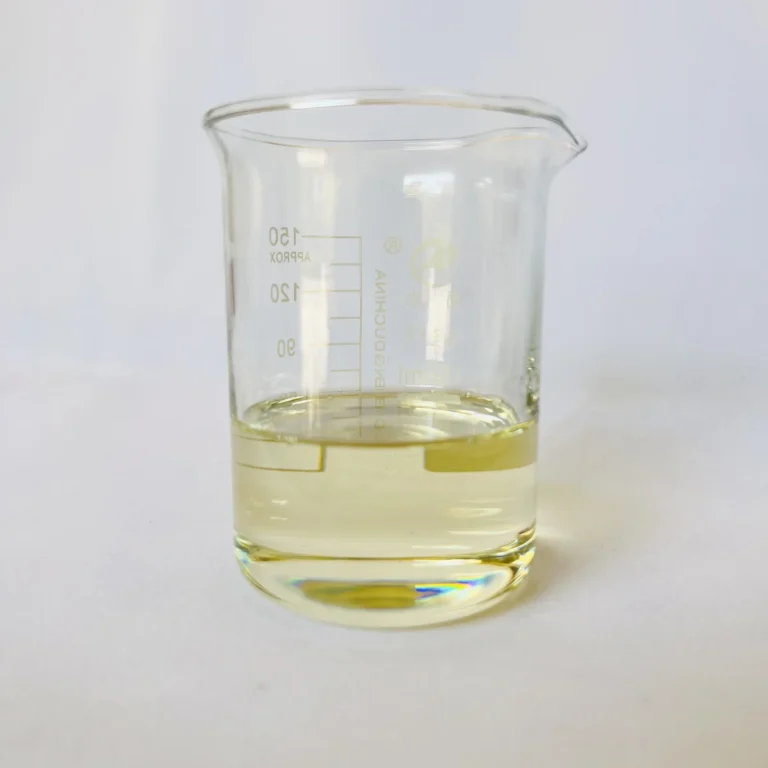
Overbased sulfonate is a liquid detergent before it is turned into a grease in the kettle. The feed is an overbased calcium sulfonate detergent that has an amorphous core of CaCO3 in a micelle of 5 to 15 nm, and its viscosity is 100 mm²/s at 100°C in ASTM D445. Those cores can turn into calcite wafers that are 100 to 500 nm wide when water, alcohol, and acid are in the oil at 80 to 105°C.
CaCO₃\ (amorphous, spherical) \xrightarrow[\Delta T = 80^\circC\sim 105^\circC]{Promoters: H₂O, ROH, RCOOH CaCO₃\ (calcite microcrystals, rhombohedral)
A crankcase oil has only 5 wt% of this detergent when it is in an engine. A batch of grease has 20 to 50 wt% of a feed where the total base number is at 420 to 430 mg KOH/g in ASTM D2896, and calcium is 15.85 wt% in ASTM D5185. That high charge puts 80 to 200 mg KOH/g of base into the grease, and it is with lubricant additive components.
The turbidity of the neat feed in ASTM D6181 must be at or below 15 NTU and not at 20 NTU, because free lime that is left in the oil can cause false thickening. A clean lot of feed is needed so that the conversion is complete. This precursor also has foam at 25/0 mL in ASTM D892 and color at 1.6 in ASTM D1500, while the ash in ASTM D874 is steady.
2. Decoding ISO 6743-9 and NLGI HPM Specifications: Water and Corrosion Debate
2.1 The Five-Position ISO 6743-9 Framework and NLGI HPM Tags
Five letters after the prefix ISO-L-X can set the limits of a grease in ISO 6743-9. Letters one and two are the low and high limits on heat while letter four is the load in ASTM D2596, and letter five is the NLGI Grade from 000 to 6 in ASTM D217 or ISO 2137. In 2020, the rule of NLGI HPM was put in place of ASTM D4950, and it has +WR, +CR, +HL, and +LT tags for service.
2.2 Position 3 Deep-Dive: Grade E vs. Grade I
Letter three in the code of ISO 6743-9 is the spot that grades water and rust. A grease is given that third letter from its washout score in water under DIN 51807-1 or ISO 11009, and it also has its rust score in a wet bearing under ISO 11007 or ASTM D6138. The table below can show how letter three is able to separate a soap from calcite when water is in the housing.
| Position 3 Letter | Water Resistance (DIN 51807-1 / ISO 11009) | Rust Protection (ISO 11007 / ASTM D6138) | Typical Architecture |
|---|---|---|---|
| A / B / C | Low — No water resistance | None (A) / Fresh (B) / Salt (C) | Simple soap |
| D / E / F | Medium — Static water intact | None (D) / Fresh (E) / Salt (F) | Lithium 12-HSA |
| G / H | High — Washout $\le 5\text{ wt}\%$ | None (G) / Fresh Water (H) | Lithium Complex (ISO-L-XBEHB 2) |
| I | High — Washout $\le 5\text{ wt}\%$ | High — Sea Water (0/0) | Calcium Sulfonate (ISO-L-XCFIB 2) |
Standard grades of lithium complex have an E or an H in that spot, because their EMCOR score in ASTM D6138 is 2/2 or 3/3 when 5 wt% of sea water is in the housing. Chloride ions in salt water can push the soap off the steel. Because the sulfonate and the calcite are passive on steel under ASTM B117, a calcium sulfonate has a 0/0 score and gets the ISO-L-XCFIB 2 code.
2.3 The Water Wash-out vs. Water Spray-off Paradox
Washout in ASTM D1264 and spray-off in ASTM D4049 do not put the same force on a film. In ASTM D1264 at 79°C, where water is around a bearing, a calcium sulfonate has a loss below 1.0 wt% because its tails keep water out like the bond in calcium sulfonate versus calcium phenate detergents. When a jet of water at 276 kPa is on a plate in ASTM D4049, 30 to 50 wt% of it can wash off.
The flat wafers of calcite are stiff and have no long fibers in them, so an unmodified batch does not have the pull that it must have to cling to flat steel. A lithium complex has long fibers of soap that have tack on a panel. When formulators blend 1.0 to 2.5 wt% of polyisobutylene into a calcium sulfonate, the loss in ASTM D4049 is below 15 wt% and it stays on wet rolls.
3. Tribological Performance & Additive Chemistry: Intrinsic Calcite vs. Sulfur-Phosphorus Packages
3.1 Extreme-Pressure and Antiwear Mechanisms
Boundary protection in a calcium sulfonate is from the wafers of calcite that are in its thickener. The platelets are able to slide on their cleavage planes so they can form a film of 100 to 300 nm, and this layer has a weld load of 400 to 620 kgf in ASTM D2596 and 60 lbs in ASTM D2509. That layer of calcite can also keep the wear scar at 0.40 mm in ASTM D2266 when there is no sulfur in the oil.
In a plant trial on a white grease of lithium, ZDDP that was primary left stains on copper in ASTM D4048, and cutting the dose let the scar in ASTM D2266 go above 0.60 mm until borate was in it. Sulfur that is active in a soap can pit a cage of brass when hot. Because calcite has no sulfur, it has 1a in ASTM D4048 and works with extreme pressure additives at 7 to 10 wt% sulfur in ASTM D1552 to add 5 to 8%.
3.2 High-Temperature Service Ceiling vs. Dropping Point Fallacy
In the oven test of ASTM D2265, a lithium complex can melt and drop oil at 260 to 280°C. A calcium sulfonate is solid above 300 to 316°C in that cup, but the dropping point only shows when a soap melts and does not tell how long the oil can last in air. The real life of a grease above 120°C is set by the oxidation bomb in ASTM D942 at 100 hours and in ASTM D5483.
Oxidation of the liquid oil is the true limit when a fan or kiln is hot. The crystals of calcite do not melt at 300°C, but a mineral base oil is oxidized into coke above 160°C and the tails of the surfactant can break down near 200°C. The safe ceiling for service is 180 to 200°C for a synthetic polyalphaolefin calcium sulfonate and 150 to 160°C for a lithium complex.
4. Rheology, Centralized Pumpability, and Plant Operational Limits
4.1 Herschel-Bulkley Flow Dynamics and Centralized Line Delivery
Both types of grease are under the same non-Newtonian flow law when they are in a pipe. Neither grease can move in a pipe until the pressure from the pump is above the yield stress of the thickener, and the drag is higher with the shear rate and the flow index. Engineers have an equation that can link the shear stress, the yield stress, and the shear rate when the grease is in the line:
\tau = \tau_0 + K \cdot \dot{\gamma^n
Because a calcium sulfonate has 20 to 50 wt% of solids in oil, its density is at 1.00 to 1.08 g/cm³ while a lithium complex is at 0.90 to 0.94 g/cm³ in a drum. That dense lattice of calcite has high yield stress when the shear rate is below 10 s⁻¹. Its change after 100,000 strokes in ASTM D217 is below 18 dmm, and its pressure in DIN 51805 at -20°C is at 1,100 to 1,600 mbar or 600 to 850 mbar.
Lube pipes on outdoor cranes can stall in the cold if the grease is too stiff. When a blender pairs a grease-grade overbased calcium sulfonate with a light oil of polyalphaolefin at NLGI Grade 1 or 1.5, the pressure in DIN 51805 at -20°C is below 900 mbar and it can flow. That winter grade can move in narrow lines without tripping a valve, and it still has a weld load of 400 kgf in ASTM D2596.
4.2 High-Speed Bearing Starvation and Speed Factor Thresholds
Oil bleed in the test of ASTM D6184 at 100°C for 30 hours is low for a calcium sulfonate. The calcite matrix has a bleed of only 0.5 to 1.5 wt% of its oil in that test and a lithium complex is at 2.0 to 5.0 wt%, because the pores hold the oil in. In a 3,000 rpm motor above 400,000 mm·rpm, that bleed pushes heat from 65°C to 115°C, so speed must be below 200,000 mm·rpm.
From the labSpeccing a hydraulic, gear or turbine oil? CheMost supplies the chemistry.Browse industrial packages
5. Formulation Economics, Manufacturing Energy, and Global Supply Logistics
5.1 Raw Material Cost Balance and Processing Energy
Kettle time and heat demand are lower for a calcium sulfonate than they are for a soap. A soap of lithium complex must be cooked at 190 to 210°C for 10 to 14 hours in a vessel, whereas an overbased calcium sulfonate is converted at 100 to 130°C and is done in 4 to 5 hours. A 20 to 50 wt% charge is above 8 to 14 wt%, but calcite has no sulfur and puts 16 metric tons in a box where powder is 8 tons.
5.2 Intermix Compatibility Under ASTM D6185 and Field Conversion Protocol
Binary compatibility between calcium sulfonate and lithium complex is borderline when it is under ASTM D6185. A 50:50 mix of these two does not turn into soup like a blend with polyurea or bentonite clay, but competition from the surfactants in hot shear can soften the penetration in ASTM D217 by 30 to 50 dmm. Crews must not mix the two greases in a bearing when they switch a line, because the melt point can drop.
Adding fresh grease on top of an old thickener can cause runout at a seal. When a plant converts a machine or tests grease additive packages, the crew must open the drain plug to purge the old soap, put in fresh grease until clean material is at the port, check seals, and log heat. That four-step purge is able to clear the old soap out of the track, and the new film of calcite can coat it.
6. International Parameter Matrix
| Parameter | Standard | Lithium Complex | Calcium Sulfonate | Unit |
|---|---|---|---|---|
| Dropping Point | ASTM D2265 / ISO 2176 | $260\sim 280$ | $\ge 300\ (316+)$ | °C |
| Operating Ceiling | DIN 51825 / ISO 12924 | $140\sim 160$ | $180\sim 200$ | °C |
| Four-Ball Weld | ASTM D2596 | $250\sim 315$ | $400\sim 620+$ | kgf |
| Four-Ball Wear | ASTM D2266 | $0.45\sim 0.60$ | $0.35\sim 0.45$ | mm |
| Timken OK Load | ASTM D2509 | $40\sim 50$ | $60\sim 75+$ | lbs |
| Worked Stability | ASTM D217 | $+25\sim +35$ | $+5\sim +18$ | dmm |
| Water Wash-Out | ASTM D1264 / ISO 11009 | $2.5\sim 6.0$ | $< 1.0\ (0.3\sim 0.8)$ | wt% |
| Water Spray-Off | ASTM D4049 | $25\sim 40$ | $30\sim 50$ / $< 15$ | wt% |
| EMCOR Distilled | ISO 11007 / ASTM D6138 | $0/0$ | $0/0$ | Rating |
| EMCOR Sea Water | ISO 11007 / ASTM D6138 | $2/2\sim 3/3$ | $0/0$ | Rating |
| Copper Corrosion | ASTM D4048 | $1\text{b}\sim 2\text{b}$ | $1\text{a}$ | Rating |
| Static Oil Bleed | ASTM D6184 | $2.0\sim 5.0$ | $0.5\sim 1.5$ | wt% |
| Oxidation Bomb | ASTM D942 | $20\sim 40$ | $< 17$ | kPa |
| Low-Temp Flow | DIN 51805 | $600\sim 850$ | $1,100\sim 1,600$ | mbar |
| Speed Factor | Bearing Limit | $400,000\sim 500,000$ | $< 200,000$ | mm·rpm |
| Compatibility | ASTM D6185 | Borderline | Borderline (Purge) | Class |
| NLGI HPM Tag | NLGI HPM | HPM + LT | HPM + WR + CR + HL | Tag |
7. Selection Decision Tree & Frequently Asked Questions
Water ingress, shock load, and shaft speed can set the boundary between these two greases. A calcium sulfonate is built for casters, mills, wet rolls, winches, and pins when the speed is below 200,000 mm·rpm and where water or shock can wreck a soap. A lithium complex is the choice for motors, fast fans, hubs, and cold lines when those systems must have low pressure from the pump.
Can you safely mix calcium sulfonate and lithium complex greases during plant changeovers?
Binary compatibility between calcium sulfonate and lithium complex is borderline when it is under ASTM D6185. A 50:50 blend is more stable than a mix with polyurea or clay, but clash from the surfactants in hot shear can still soften the penetration in ASTM D217 by 30 to 50 dmm and lower the melt point. Crews cannot top up a bearing when they switch, and they must run a four-step purge until fresh grease is at the port.
Why is calcium sulfonate grease not recommended for high-speed electric motor bearings?
Bearings in a motor can run hot with a calcium sulfonate because it holds the oil in. In ASTM D6184, a calcium sulfonate has a bleed of 0.5 to 1.5 wt% while a soap is at 2.0 to 5.0 wt%, and its 20 to 50 wt% of solids can make drag above 200,000 mm·rpm. A 3,000 rpm motor at 400,000 mm·rpm must have the higher bleed of a lithium complex, and that keeps the track cool.
Does a 316°C dropping point mean calcium sulfonate grease can run continuously at 300°C?
A 316°C reading in ASTM D2265 is only the heat where a sample melts in a cup. The crystals of calcite do not melt at 300°C, but a mineral base oil is oxidized into coke above 160°C and the tails of the surfactant can break down near 200°C. The safe ceiling for service is at 180 to 200°C for a synthetic calcium sulfonate and at 150 to 160°C for a lithium complex.
What international specification code proves a grease will resist both water washout and salt water rust?
Letter three in the code of ISO 6743-9 must be the letter I when salt is in the water. An I rating shows that the grease has no more than 5 wt% loss in ISO 11009 and can pass the rust test in sea water under ISO 11007 with a 0/0 score. When water jets hit the machine, the data sheet should also have the NLGI HPM +WR and +CR tags and a loss below 15 wt% in ASTM D4049.
Technical Support & Formulation Consultation
Balancing calcium-to-magnesium detergent ratios, high-TBN sulfonate/phenate treat rates, or low-SAPS compatibility for TGDI engine oils and heavy-duty diesel formulations? CheMost technical specialists provide certified Certificate of Analysis (CoA) parameters, batch verification, and custom formulation blending assistance.
References & Empirical Standards
- ISO 6743-9:2003, Lubricants, industrial oils and related products (class L) — Classification — Part 9: Family X (Greases). International Organization for Standardization. https://www.iso.org/standard/38072.html
- ASTM D4950-19, Standard Classification and Specification for Automotive Service Greases. ASTM International. https://www.astm.org/d4950-19.html
- NLGI High-Performance Multiuse (HPM) Grease Specification (2020), Technical Certification Requirements for HPM Core, +WR, +CR, +HL, and +LT Categories. National Lubricating Grease Institute. https://www.nlgi.org/hpm/
- Ward, W. C. and Mackwood, W. (1995), “Understanding Calcium Sulfonate Thickeners and Their Conversion Kinetics”, Tribology Transactions, 38(4), pp. 859–868. https://doi.org/10.1080/10402009508983481
Related Articles
EP vs Anti-Wear Additives: How to Tell Them Apart on a Data Sheet
Demulsifier Guide: How Demulsifiers Work and How to Choose One