Browse CheMost Engine Oil Additive Packages
Start with the product family that best matches your formulation target. Each product page goes deeper into the exact grade, properties, and documentation.
CheMost manufactures complete additive packages for gasoline (PCMO) and diesel (HDDO) engine oils, covering API grades from SJ through SP and from CF-4 through CK-4. Factory-direct from Jinzhou, China — custom formulation, private label, and bulk supply available.
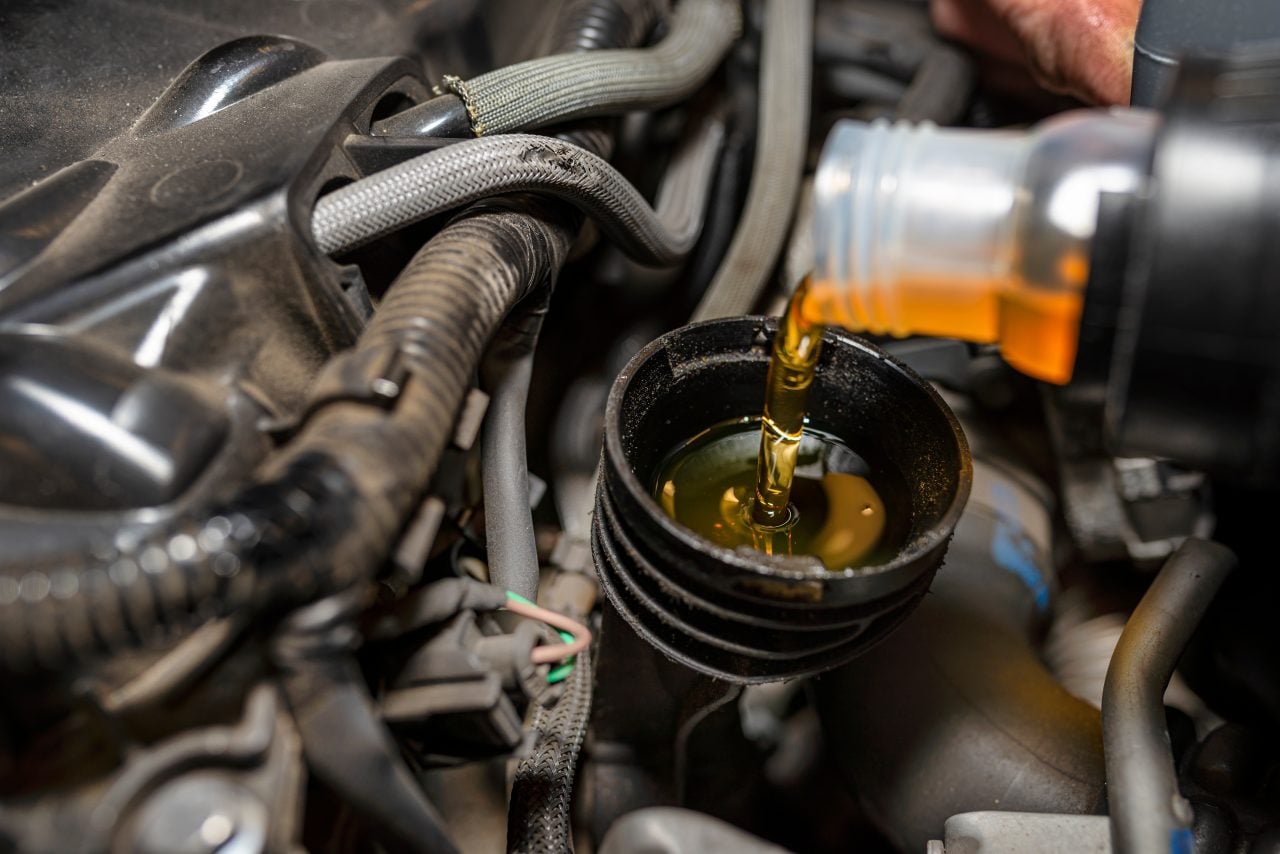
One Source for PCMO and HDDO Packages
Engine oil additive packages are the core of any lubricant blender’s product line. A well-formulated package combines detergents, dispersants, anti-wear agents (ZDDP), antioxidants, friction modifiers, corrosion inhibitors, and foam inhibitors in the correct ratios to meet a specific API, ACEA, or OEM performance category.
CheMost’s engine oil packages are developed in-house and manufactured at our Jinzhou factory, which gives us full control over raw material quality and treat rate consistency. We offer packages for two main segments:
Choose Your Engine Oil Package Segment
Passenger Car Motor Oil (PCMO)
Gasoline engine oil packages from API SJ through SP — the full range of performance tiers for passenger vehicles, light trucks, and sport utility vehicles. CheMost PA-series PCMO packages cover both single-grade and multigrade mineral and semi-synthetic formulations.
- API SJ, SL, SM/SN, SP grades
- 5W-30, 5W-40, 10W-30, 10W-40, 15W-40, 20W-50
- Fuel economy and extended drain capable
Diesel Engine Oil (HDDO)
Heavy-duty diesel engine oil packages from API CC/CD (medium-duty) through CJ-4/CK-4 (ultra-low-sulfur diesel / emission aftertreatment compatible). CheMost covers both legacy fleets and modern emission-compliant engines.
- API CC/CD, CF-4, CH-4/CI-4, CJ-4/CK-4 grades
- 15W-40, 10W-30, 5W-30 viscosity grades
- Compatible with DPF and SCR aftertreatment systems
Motorcycle 2T / 4T
Dedicated two-stroke and four-stroke motorcycle engine oil packages — because motorcycle engines lubricate simultaneously with engine, gearbox, and wet-clutch functions that automotive packages are not designed for.
- 2T: API FC/FB, total-loss lubrication systems
- 4T: API SJ/SL, JASO MA wet-clutch compatible
- ATVs, watercraft, chainsaws, and lawn mowers
PCMO vs. HDDO: How Package Composition Differs by Duty
Passenger car motor oil (PCMO) packages are formulated for gasoline engine conditions: moderate soot load, high sensitivity to phosphorus (catalytic converter protection), moderate TBN, and fuel economy priority. They are tested against API SP / ILSAC GF-6 sequences.
Heavy-duty diesel engine oil (HDDO) packages face very different conditions: high soot load (up to 6–8% soot by weight in spent oil), higher combustion acidity, and longer drain intervals (50,000–100,000 km). HDDO packages therefore use more dispersant, higher-TBN detergents, and more robust antioxidant systems. They are tested to API CK-4/FA-4 or ACEA E sequences.
What this means for your formulation: if you are converting a PCMO recipe to an HDDO duty cycle, the dispersant and detergent lines are where the treat rate moves most — expect the overall package treat rate to climb from the 10–18% PCMO range to 14–22% for HDDO, largely to carry the extra soot-suspension and acid-neutralization load, not because the chemistry itself changes families. The table below breaks out those families in detail, for either duty cycle.
CheMost supplies both PCMO additive packages and heavy-duty diesel oil packages at competitive treat rates with flexible base oil group compatibility.
The Nine Component Families, and What Each One Contributes
A complete engine oil additive package is not one chemical — it is a balanced blend of up to nine functional families, each dosed to a different order of magnitude. The table below cross-references two figures for each family: its typical share of the package concentrate itself, and — independently — its typical share of the finished oil once the package is treated in at a normal PCMO/HDDO rate. The two figures are drawn from different sources (package-composition convention vs. each family’s own finished-oil dosing data) and are consistent with each other by simple arithmetic, which is a useful sanity check when you are reviewing a supplier’s certificate of composition.
| Component family | Typical share of the package | Typical share of finished oil | Core function |
|---|---|---|---|
| Detergents (overbased sulfonates/phenates) | 10–30% | Set by target TBN, not a fixed % | Acid neutralization + high-temperature deposit control |
| Ashless dispersants (PIBSI) | 25–45% | 3–7 wt% | Keep soot and oxidation products suspended at low temperature |
| ZDDP / antiwear | 8–15% | 1.0–3.0 wt% (phosphorus-capped) | Antiwear tribofilm + secondary antioxidant activity |
| Antioxidants (hindered phenols, aminics) | 3–8% | Product-specific, commonly a few tenths of a % | Oxidative stability, especially in GDI/turbo applications |
| Friction modifiers | 0–3% | 0.25–1.0 wt% (organic); a few hundred ppm Mo (organomolybdenum) | Fuel-economy friction reduction (ILSAC GF-6 claims) |
| Corrosion inhibitors / metal deactivators & rust inhibitors | 1–3% | Base-oil dependent, no fixed figure | Protect yellow metals and ferrous surfaces from water ingress |
| Foam inhibitors | <0.1% | ~10–20 ppm (silicone types) | Prevent air entrainment that reduces film strength |
| Pour point depressant | 0–2% (often dosed separately instead) | Commonly a few tenths of a wt%; ~0.2 wt% is a typical illustrative dose | Low-temperature flow; overtreating causes pour-point reversion |
| Viscosity index improver | Almost always added separately, not part of the package | Well under ~1.5 wt% of actual polymer | Sets the multigrade viscosity spread |
Sources: package-share figures reflect standard formulation convention; finished-oil figures are drawn from CheMost’s own component family technical pages, cited by link in the table above.
What this means for your formulation: the dispersant is usually the single largest line item by weight — roughly half the package — because soot control in modern low-ash, extended-drain oils takes more ashless polymer than any other function needs. ZDDP is the family most likely to hit a hard ceiling before you run out of treat rate budget: at ~7.2% phosphorus content, a 1.0 wt% treat already contributes about 720 ppm phosphorus, close to the 800 ppm cap most PCMO specifications allow — so formulators lean on organic friction modifiers and ashless antiwear chemistry to fill any remaining wear-protection gap without breaching the phosphorus limit.
Why Source Engine Oil Packages from CheMost
- Factory DirectAll packages manufactured at our ISO-certified Jinzhou facility — no trading company markup, full quality traceability.
- Custom API Grade DevelopmentCheMost can develop packages for specific API, ACEA, or OEM categories not listed here — with in-house blending and testing capability.
- Private Label & White-Label SupplySupply without branding for lubricant blenders and distributors who market their own engine oil brands.
- Stable Raw Material SupplyIn-house manufacturing of detergents, ZDDP, and dispersant precursors ensures supply chain stability for package customers.
- Technical SupportFormulation guidance, treat-rate adjustment, and viscosity-grade consultation available from our technical team.
Request a Sample or Discuss Your Requirements
Tell us your target API grade, viscosity grade, and base oil type — CheMost will recommend the right package and provide a sample and TDS within 3–5 business days.
Request a Sample Get a QuoteEngine oil additive packages are formulated for the Automotive Lubricant industry. See our industry hub for a full overview of engine oil chemistry and related additive components.
Frequently Asked Questions
Can CheMost supply a complete additive package for a new API grade (e.g., API SN PLUS or SP with GF-6)?
CheMost’s R&D team monitors API and ILSAC specification changes and updates package formulations accordingly. Contact our technical team with the exact target specification and we will confirm current availability or development timeline.
Do CheMost engine oil packages include viscosity modifiers (VIIs)?
Standard engine oil packages do not include viscosity index improvers (VIIs / VMAs). VIIs are added separately during the blending process, allowing blenders to adjust the viscosity grade independently. CheMost also supplies VIIs separately — see our Viscosity Index Improvers product page.
What is the minimum order quantity for engine oil additive packages?
CheMost offers samples from 1 kg for evaluation purposes. Bulk commercial orders are typically 1 metric ton minimum per grade. Contact our sales team for current pricing, drum options (25 kg, 200 kg), and IBC availability.
Are CheMost’s engine oil packages compatible with Group III or PAO base oils?
Most CheMost engine oil packages are developed and tested with Group I and II mineral base oils. Compatibility with Group III and PAO synthetic base oils is application-dependent. Request the formulation TDS for compatibility guidance, or contact our technical team for synthetic-grade blending support.
What are the main types of additives in an engine oil package?
A complete package typically draws from nine functional families: detergents, ashless dispersants, ZDDP/antiwear agents, antioxidants, friction modifiers, corrosion/rust inhibitors, foam inhibitors, and (sometimes) pour point depressant — with the viscosity index improver almost always added separately by the blender. Each family is dosed to a different order of magnitude, from single-digit percentages down to parts per million for foam inhibitors.
What portion of a finished engine oil is actually additive?
For a typical PCMO formulation, the additive package itself is treated in at 10–18% of the finished oil; for HDDO, 14–22%. Within that treat rate, the dispersant alone can account for roughly half the package by weight — commonly 3–7% of the finished oil on its own — making it the single largest additive line item in most crankcase formulations.
Can I mix different additive packages to meet a specification?
No — additive packages are specifically designed and tested as complete systems. Mixing packages from different suppliers creates an untested combination that is unlikely to pass specification engine tests. If you need a specific performance level, speak to your additive supplier about packages already approved for that specification.
What is treat rate and how is it measured?
Treat rate is the percentage of additive package in the finished lubricant, by weight or volume. A PCMO package at 12% treat rate means 120 g of package per 880 g of base oil. The optimal treat rate is determined by the package developer through engine testing and is the minimum dose needed to pass all required performance tests.
Why is ZDDP treat rate capped even though more would improve wear protection?
ZDDP is the main phosphorus source in a package, and modern specifications cap total phosphorus — around 0.08 wt% (800 ppm) for API SP and ILSAC GF-6/GF-7 — because excess phosphorus can poison catalytic converters over the oil’s service life. A 1.0 wt% ZDDP treat at typical phosphorus content already contributes roughly 720 ppm, so formulators calculate the phosphorus contribution before fixing the dose and lean on organic friction modifiers or ashless antiwear chemistry to close any remaining gap.
What’s the difference between a corrosion inhibitor and a rust inhibitor in an engine oil package?
They protect different metals. A rust inhibitor (typically an oil-soluble sulfonate) forms a water-repelling film on ferrous surfaces to keep oxygen and water off steel. A metal deactivator does a related but separate job: it protects yellow metals like copper and brass bearings, and — just as important — it sequesters dissolved copper ions that would otherwise catalyse oxidation of the oil itself. Most engine oil packages carry both functions, often from the same corrosion-inhibitor line item.
Do additive packages have a shelf life?
Yes — most engine oil additive packages have a recommended storage life of 2–5 years when stored at controlled temperatures (below 30°C) in sealed containers away from moisture. Packages containing certain dispersant types may gel or precipitate on prolonged cold storage. Always check the TDS for specific storage conditions.
About this page & our data. The specifications and test methods on this page are public references (API, ACEA, ASTM, DIN, ISO, NACE) — not CheMost measurements. Grade specifications come from each product’s supplier TDS; where a value is not confirmed for a grade, we mark it “on request” rather than estimate. CheMost is a manufacturer and sourcing partner established in 2013; OEM / spec certification is held by the finished-product marketer, not the additive supplier. Last reviewed June 2026 · CheMost technical team.