An industrial oil fails from oxidation and water, not combustion — so a detuned engine oil is the wrong starting point, and each application needs its own additive chemistry. CheMost supplies the packages and components built for that reality — for finished hydraulic, gear, turbine and compressor oils targeting ISO 11158 / 12925-1 / 8068, DIN and AGMA. Factory-direct from Jinzhou, China.
The Industrial-Oil Principle: Match the Chemistry to the Failure Mode
This is where a real industrial formulation starts — and where a re-labelled engine oil goes wrong. An industrial oil is judged on four duties an engine oil is not built for, and each application weights them differently.
Build for the failure mode, not the viscosity grade
Hydraulic leads on pump anti-wear and fast water release; gears lead on EP load-carrying and yellow-metal safety; turbines on oxidation life and air/water separation; compressors on oxidation control at hot discharge. The deciding question is which failure mode dominates — not which oil is “best.”
Open the Selection Matrix — match your application to a grade→- Oxidation life measured in years, not kilometres. A turbine oil can serve for years; the antioxidant system — not detergency — is the heart of the formulation. With no fuel soot or combustion acid, the high-TBN overbased detergents of an engine oil are unnecessary, and their ash becomes a liability.
- Water has to leave, fast. Industrial systems meet condensation, washdown and process water. The oil must shed water (demulsibility) and release entrained air — the opposite of an engine oil that disperses contaminants — so demulsifiers and air-release additives outrank dispersants.
- Cleanliness for microns of clearance. Servo valves and precision pumps run on a few microns; ashless, deposit-free chemistry protects them where a high-ash crankcase oil would foul them.
- Load carried by EP, not just anti-wear. Enclosed gears see far higher contact pressure than a cam; sulfur–phosphorus EP carries the load, balanced so it protects steel without attacking the bronze in a worm wheel.
So the decision is never “which oil is best” — it is which failure mode dominates your application. The matrix below turns that into one view. (New to the topic? Start with the guide: What Are Industrial Lubricant Additives?)
What an Underbuilt Industrial Oil Actually Costs
Additive chemistry is not where buyers like to spend — until a failure traces back to it. Three figures from the public record show why the formulation, and proof of it, belong in the specification:
Figures above are third-party industry data, cited as such — not CheMost measurements. They frame the stakes; the confirmed numbers for any CheMost grade are on its TDS.
The Industrial Oil Selection Matrix
Each application is set by a different dominant failure mode, which fixes the lead additive family and the governing standard. Read across your row:
| Application | Dominant failure mode | Lead additive family | Governing standard |
|---|---|---|---|
| Hydraulic | Pump wear · filterability · slow water release | AW (ZDDP or ashless) + demulsifier + antifoam | ISO 11158 HM/HV · DIN 51524 |
| Industrial gear | Scuffing · micropitting · yellow-metal attack | Sulfur–phosphorus EP + rust inhibitor | ISO 12925-1 · DIN 51517-3 · AGMA 9005 |
| Turbine (steam/gas) | Oxidation over years · air & water carry-over | R&O antioxidant + demulsifier + rust | ISO 8068 · DIN 51515 |
| Compressor (air) | Oxidation & varnish at hot discharge | Ashless antioxidant (clean, low-ash) | ISO 6743-3 · DIN 51506 |
| Slideway | Stick-slip · film drainage on ways | Friction modifier + mild EP + tackifier | ISO 6743-13 · Cincinnati P-47/50 |
| Fire-resistant hydraulic | Ignition near heat sources | Water-glycol (HFC) or synthetic ester (HFDU) | ISO 12922 HFC / HFDU |
Standards shown are the public categories the finished fluid is built to — most industrial ISO/DIN/AGMA categories are finished-oil specifications. CheMost packages are formulated to help a finished fluid meet them; the OEM and fire-resistance (e.g. Factory Mutual) approvals are obtained and held by the finished-fluid marketer, not the additive.
Tell us your application and the standard you must meet, and we’ll name the package or components — plus a starting treat rate — the same day.
Pre-Balanced Packages & the Components Inside
Pre-balanced packages organised by application; the individual components that build them are listed below for formulators who dose their own.
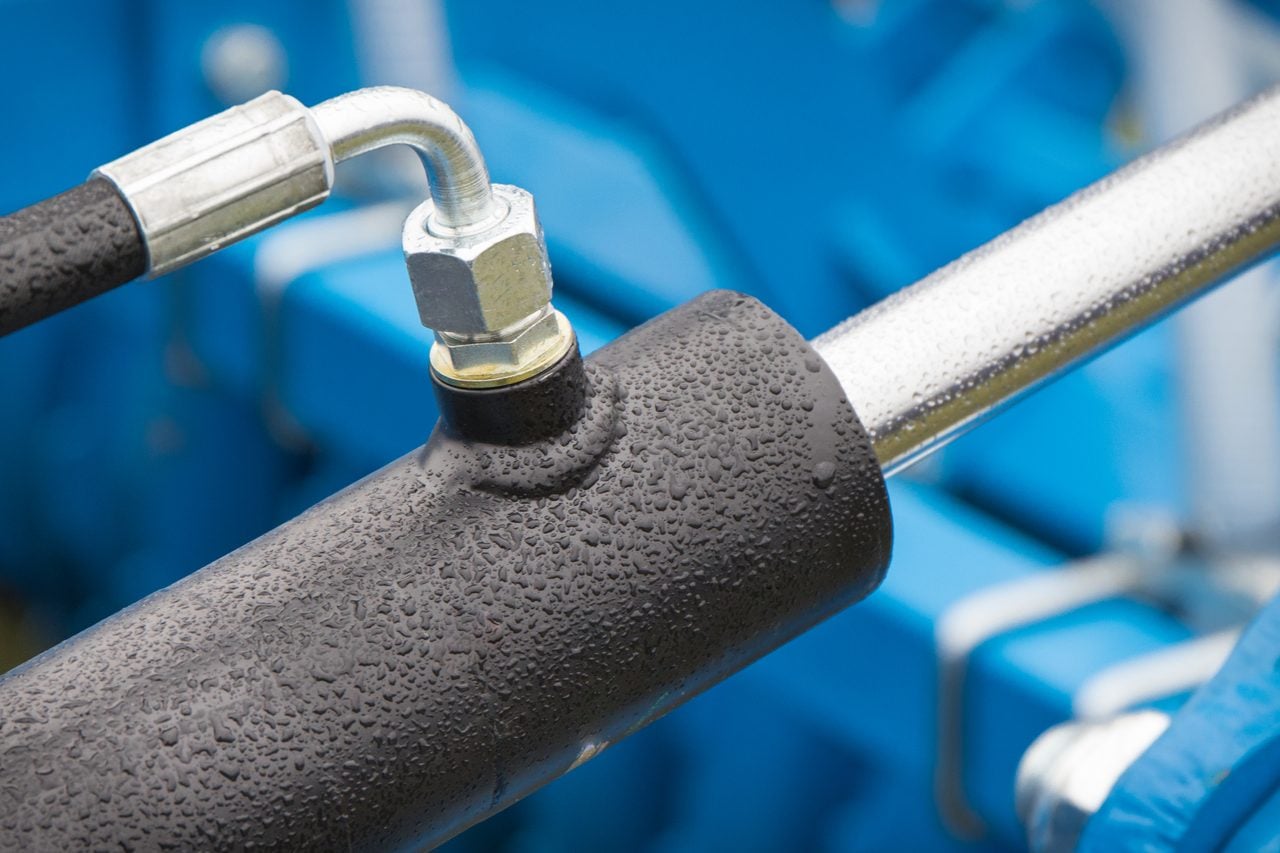
Hydraulic — 7 grades
Conventional ZDDP anti-wear (ISO HM), zinc-free / ashless for servo systems, and fire-resistant HFC / HFDU.
Hydraulic oil additive package →
Industrial gear
CLP mineral and synthetic, worm-gear and open-gear. Sulfur–phosphorus EP for load-carrying; yellow-metal control; foam control for splash sumps.
Gear oil additive package →
Compressor & turbine
Ashless R&O for air compressors (screw, reciprocating, vane), steam and gas turbine oils, heat-transfer fluids and slideways — oxidation life, demulsibility and air release lead, not EP.
Compressor & turbine oil additive package →
ZDDP / Anti-wear
EP Additives
Antioxidants
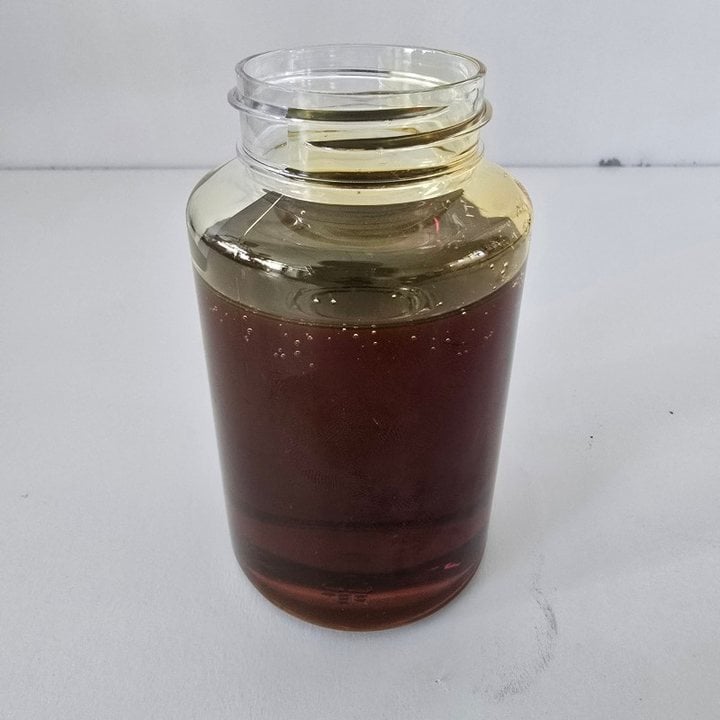
Rust Inhibitors
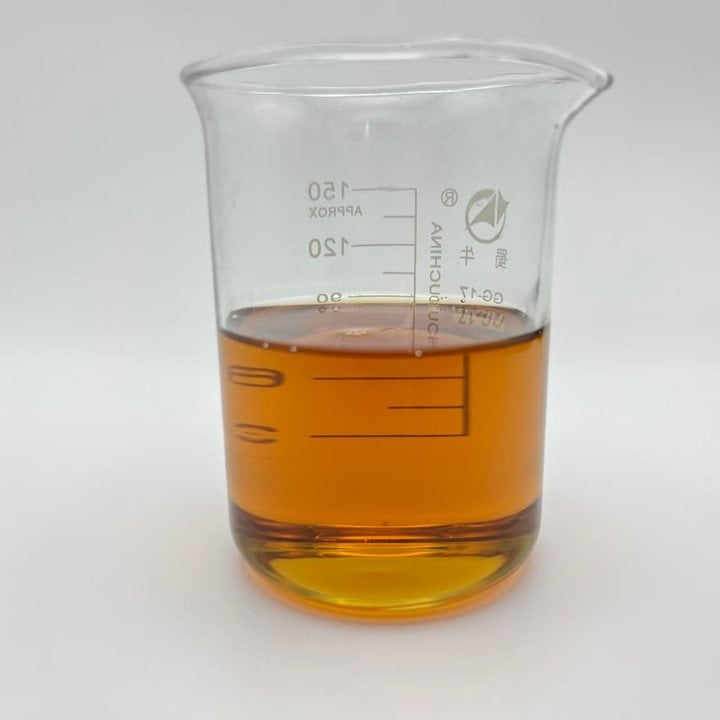
Corrosion / Metal Deactivators
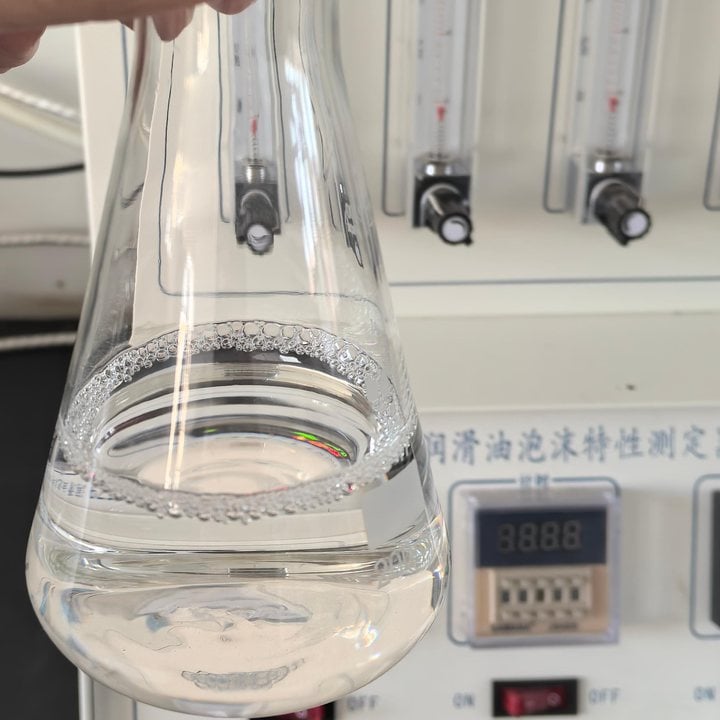
Foam Inhibitors
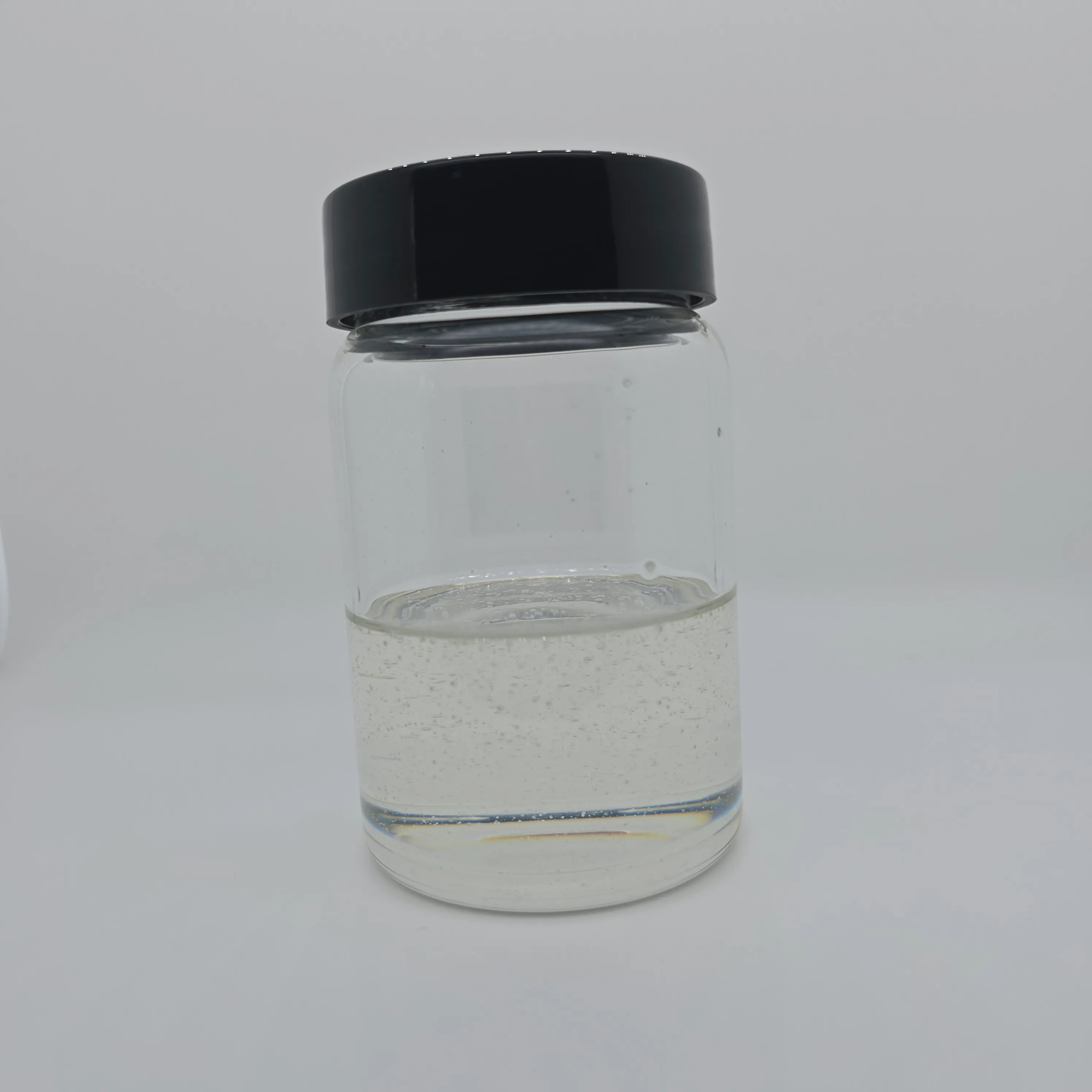
Emulsifiers / Demulsifiers
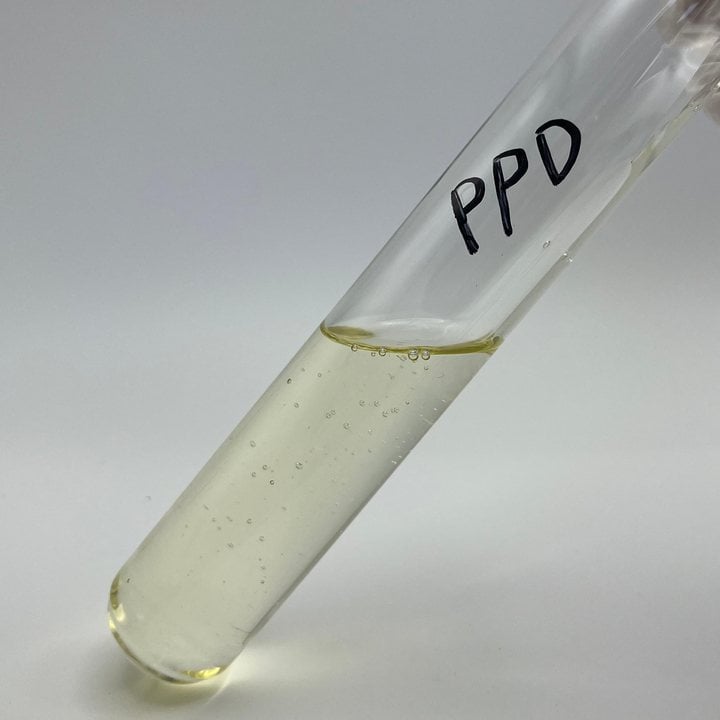
Pour Point Depressants
8 of the 13 categories most used in industrial oils — see all 13 in the full components catalog. Chemistry & governing test are public references; the confirmed value for any CheMost grade is on its TDS.
Performance Tests — What Each One Measures
Knowing which test governs your application — and what it actually measures — is how you write a real specification rather than copy a viscosity grade. These are the public test methods (not CheMost measurements):
| Test | Method | What it measures | Typical public target |
|---|---|---|---|
| FZG scuffing | ISO 14635 | Gear load capacity (fail load stage) | ≥ 12 (DIN 51517-3 CLP) |
| TOST oxidation | ASTM D943 | Hours to 2.0 mgKOH/g acid | ≥ 2,000 h (premium turbine) |
| RPVOT | ASTM D2272 | Rapid oxidation-stability screen | ≥ 250 min (typical turbine) |
| Demulsibility | ASTM D1401 | Time to shed water | ≤ 30 min to 3 mL emulsion |
| Rust prevention | ASTM D665 A/B | Ferrous corrosion (water / seawater) | Pass — no rust |
| Foam | ASTM D892 | Foam tendency & stability | Seq I ≤ 150 / 0 mL |
| Copper corrosion | ASTM D130 | Yellow-metal attack | 1b max (3 h / 100 °C) |
| Cleanliness | ISO 4406 | Particle-contamination code | ≤ 18/16/13 (servo) |
Targets shown are typical public application-standard / OEM values — not CheMost measurements. The exact pass limit lives in your application standard (ISO 8068, DIN 51517-3, etc.) and OEM requirement; the confirmed result for any CheMost grade is on its TDS. Deep dives: ASTM D665 · compressor oxidation.
Have a number to meet — FZG ≥ 12, TOST ≥ 2,000 h, RPVOT ≥ 250 min, a foam or cleanliness limit? Send the target and we’ll point to a grade that’s built to reach it.
How We Verify a Grade
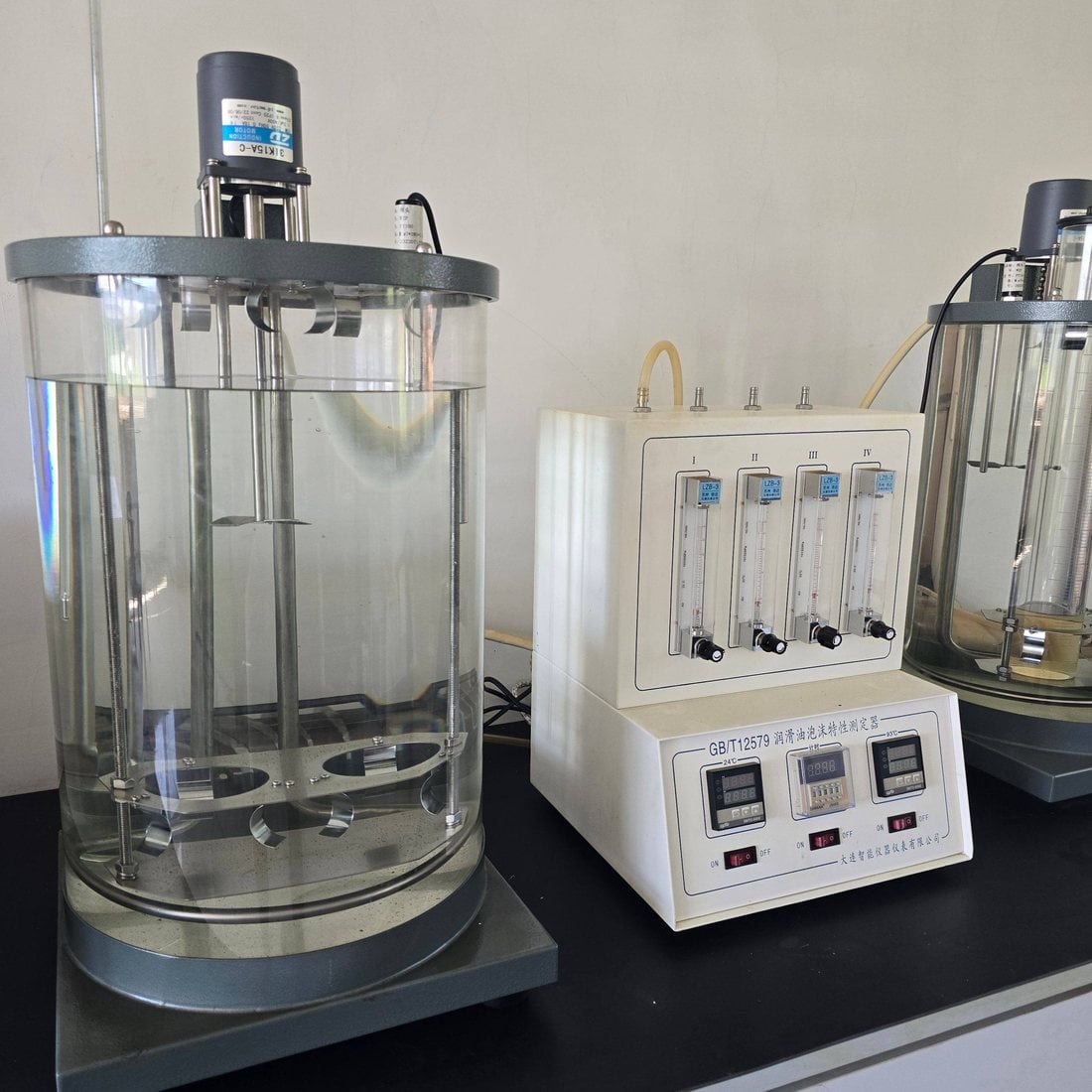
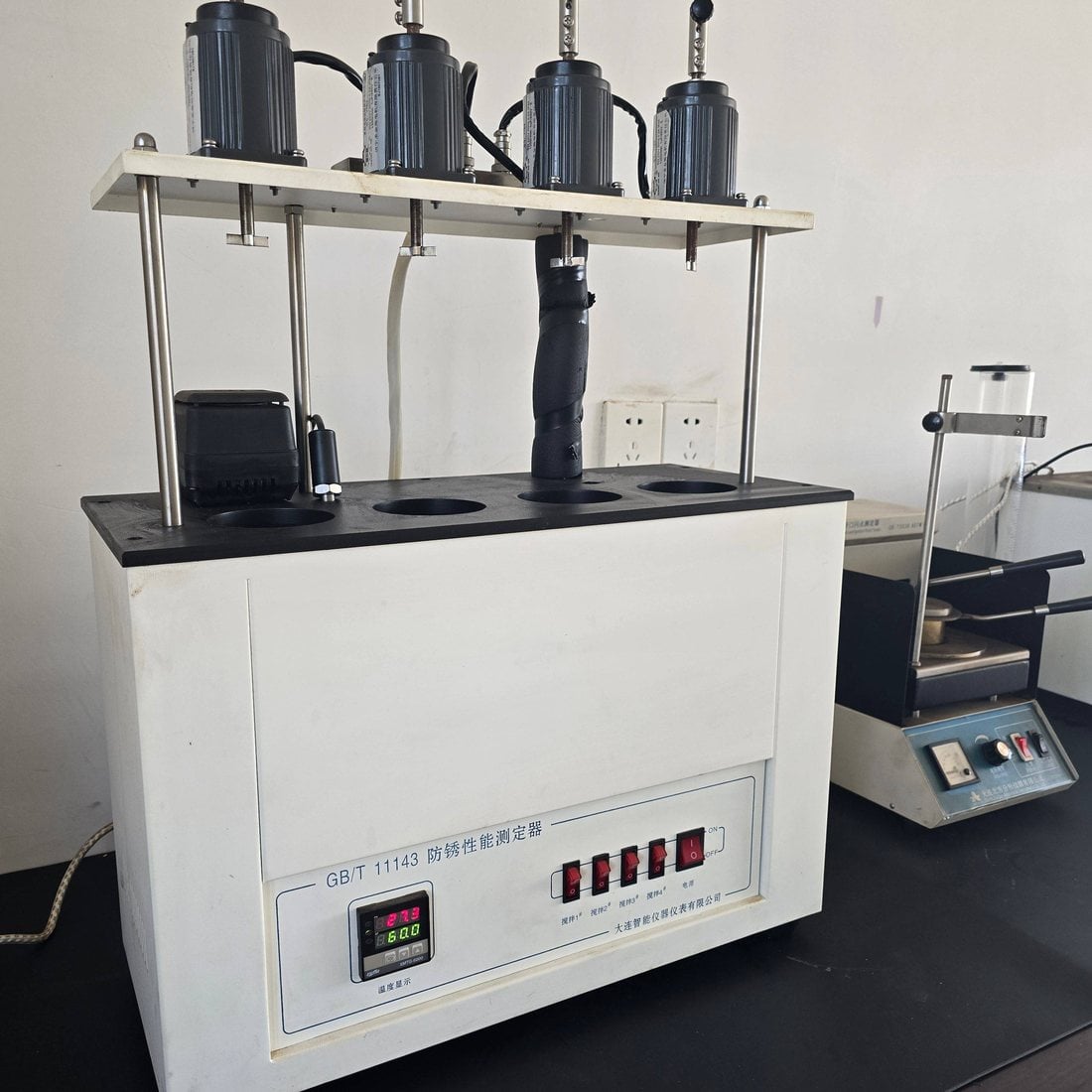
“We report the confirmed value from each grade’s TDS — and back it with an SGS report on request. If a number isn’t measured, we mark it ‘on request’ rather than print it.”
- In-house QC runs the core bench tests — viscosity, foam (ASTM D892), rust (ASTM D665) and more — on incoming and outgoing material.
- Every batch ships with a Certificate of Analysis, checked against the grade’s published TDS; an independent SGS report is available on request.
- Standard target values on this page are public references, cited as such — not CheMost measurements.
How an Industrial Oil Is Built — Base Oil + Additive System
A finished industrial oil is roughly 75–99% base oil; the additive system is the rest — typically a balanced package of 5–15 individual components dosed at about 0.3–4% depending on the duty. The treat-rate band tells you how much chemistry you are actually buying and where the cost sits:
| Oil type | Base oil | Typical additive treat rate | What dominates the dose |
|---|---|---|---|
| Turbine / compressor (R&O) | Group I–III · PAO | well under 1% | antioxidant reserve |
| Anti-wear hydraulic | Group I–II (III for HV) | ~0.5–1.5% | AW + demulsifier + antifoam |
| Slideway | Group I–II | ~1–3% | friction modifier + tackifier |
| Industrial gear (CLP) | Group I–II · PAO | ~1.5–4% | sulfur–phosphorus EP |
Ranges are typical industry figures; the exact treat rate for a CheMost grade is on its TDS, and the treat-rate calculator sizes a dose to your target.
Package or Components — Which Route Fits You
Two ways to buy, and the right one depends on your formulation capability and SKU breadth:
| Ready package | Individual components | |
|---|---|---|
| Best for | Entering an industrial market · broad SKU range · no in-house formulation team | Large volume · proprietary chemistry · fine-tuning to an OEM approval |
| You control | Base oil + treat rate | Every additive level (zinc, demulsibility, film strength) |
| Time to market | Fast — pre-balanced | Slower — you formulate |
| Documentation | TDS · SDS · COA per grade | TDS · SDS · COA per component |
Many formulators start with a package to benchmark, then migrate to components once their team has validated each additive’s contribution.
Buying Industrial Additives — Lead Time, Documentation & Inspection
Sourcing additives from a Chinese manufacturer raises fair questions about lead time, paperwork and verification. Here is exactly what a CheMost order includes:
- Samples first. 1 kg and 5 kg evaluation samples so you can bench-test before you commit; bulk in 200 kg drums and 1000 kg IBC.
- Lead time you can plan around. Stocked grades typically ship in 1–15 days; custom grades and larger volumes are quoted with a firm schedule.
- Full documentation per shipment. Certificate of Analysis (COA) for the batch, Technical Data Sheet (TDS) and Safety Data Sheet (SDS); HS-code classification and certificate of origin for export.
- Independent verification on request. A third-party SGS report can confirm the goods before they leave.
- Regulatory support. REACH and TSCA guidance for the markets you ship into.
- What we need to quote. The application, the standard you must meet, the ISO viscosity grade, your base-oil group and an annual volume — with that we name the grade and a starting treat rate the same day.
Send the grade or application, your volume, packaging (drum / IBC) and destination — we’ll come back with a price, a firm schedule, COA / TDS / SDS and an SGS report on request.
Why CheMost — Real Data, Not Borrowed Approvals
Plenty of suppliers will quote you an OEM approval or a spec they cannot actually stand behind. We do the opposite, on purpose — and it is the most useful thing a formulator can ask of a supplier:
- We publish the real package fingerprint. The values on our data sheets are measured TDS figures; where a number is not confirmed for a grade, we mark it “on request” rather than invent one.
- We formulate to international standards. ASTM, ISO, DIN and AGMA — the categories your finished fluid is actually tested against — not domestic-only standards.
- We do not claim approvals we do not hold. The OEM approval and any fire-resistance listing belong to the finished-fluid marketer who licenses the finished oil. What we hand you is the real additive data plus an optional third-party SGS report — so you can prove the goods yourself.
- Manufacturer and sourcing partner since 2013, shipping worldwide with COA, TDS and SDS on every order.
- And where we’re not the right fit, we say so. We do not license finished oils; a high-temperature gas-turbine oil may need a synthetic (PAO / ester) base we would specify separately; and we will not quote you an OEM approval we do not hold — those belong to the finished-oil marketer.
Documentation & Third-Party Verification
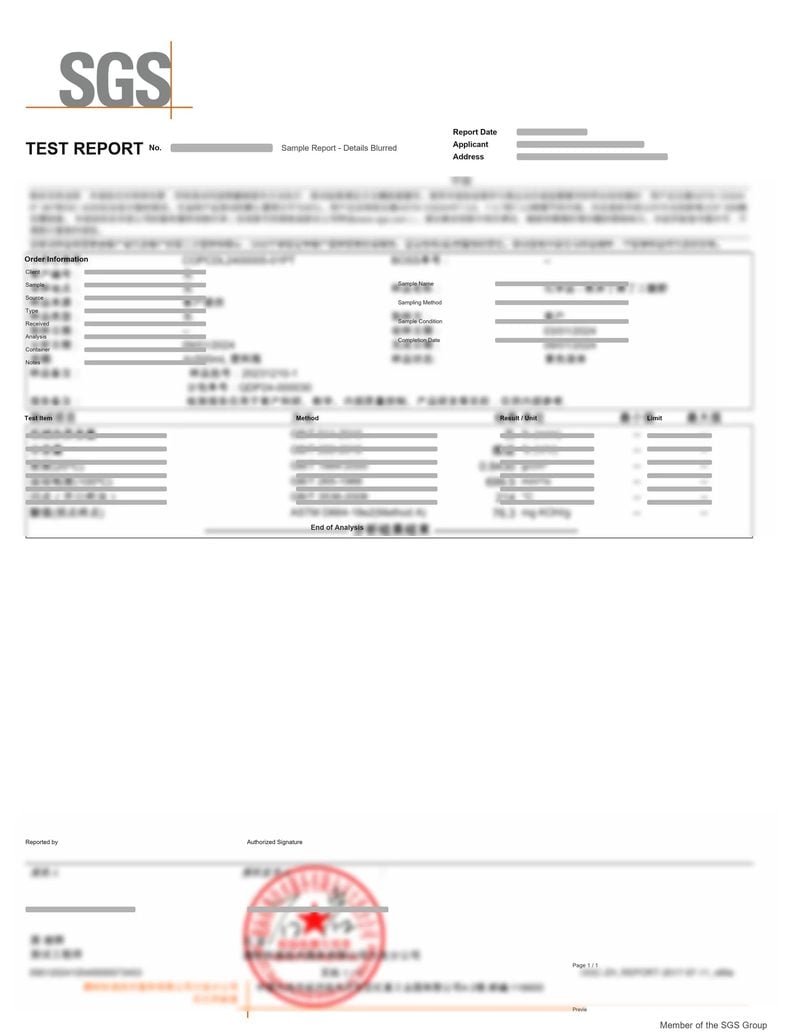
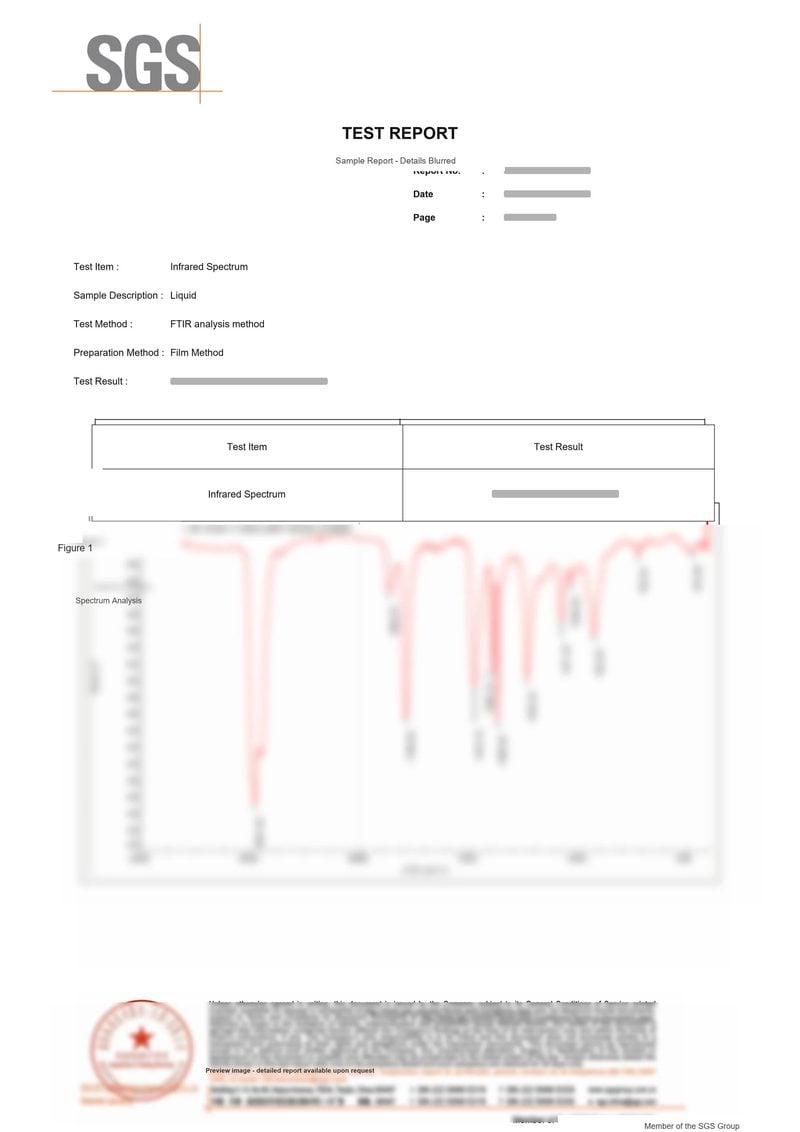
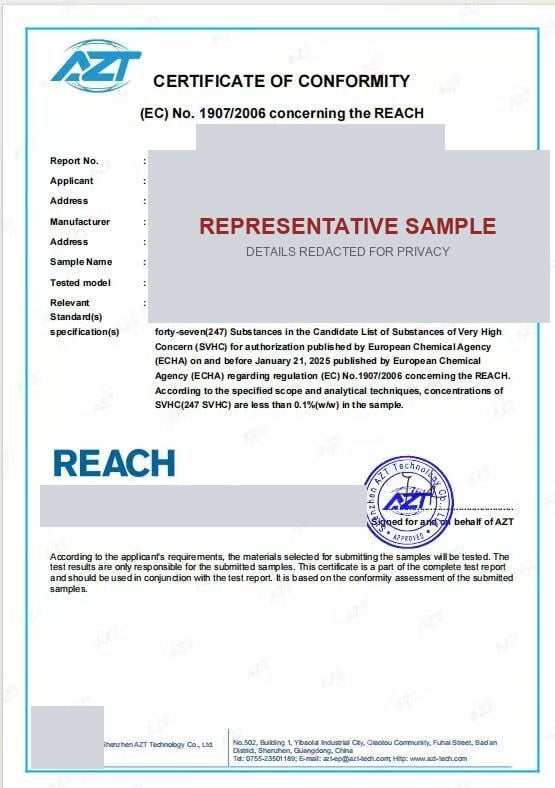
Documents shown are representative samples with identifying details redacted for privacy — they illustrate the test-report and REACH SVHC-conformity formats available for our sourced materials, provided on request per grade/batch, not certifications held by CheMost in its own name. An independent SGS report is available on request. We never imply an approval or registration we do not hold.
Size the Formulation, Pull the Documents
Three interactive calculators to size a dose or a blend, plus the documents and background reading behind each grade.
Frequently Asked Questions
Why can’t I use an engine oil in an industrial system?
Because they fail differently. An engine oil is built around combustion — high-TBN detergents to neutralise acid, dispersants to carry soot. An industrial system has no combustion: it needs years of oxidation life, fast water separation and ashless cleanliness, and (for gears) EP load-carrying. An engine oil’s detergent/ash load is unnecessary and can foul servo valves or hurt demulsibility.
What’s the difference between ISO HM and ISO HV hydraulic oil?
HM corresponds to DIN 51524 Part 2 (HLP) and HV to Part 3 (HVLP); both share the same anti-wear and rust/corrosion core, but HV adds viscosity–temperature performance — a viscosity index of at least 140–150 versus around 90–100 for HM. HV suits mobile hydraulics where oil temperature swings from cold start to hot running; HM is fine for indoor systems with controlled sump temperatures.
How do I choose between zinc and zinc-free (ashless) hydraulic packages?
By the system. Servo valves with a few microns of clearance are sensitive to zinc deposits and need an ashless package; environmental zinc-discharge limits and silver components also push to ashless. Standard systems without servo valves can run conventional zinc (ZDDP) at lower cost. CheMost supplies zinc, low-zinc and zinc-free hydraulic grades.
What oxidation performance do CheMost turbine packages meet?
They are formulated to address the oxidation-stability requirements of ISO 8068 and DIN 51515, measured by TOST (ASTM D943) and RPVOT (ASTM D2272). The achievable result depends on the base oil chosen with the package; the confirmed value for each grade is on its TDS rather than estimated here. OEM approval status (e.g. GE or Siemens turbine specs) is held by the finished-oil marketer.
Can CheMost supply fire-resistant hydraulic packages?
Yes — a water-glycol (L-HFC) package for high-fire-risk environments (die casting, steel mills, mining) and a synthetic-ester (L-HFDU) package with better biodegradability and lubricity. Both are formulated for water-glycol and synthetic-ester fire-resistant fluids; the ISO 12922 classification and any Factory Mutual approval are obtained and held by the finished-fluid marketer. Fire-resistant fluids need compatible seals and pump materials — ask for the compatibility checklist.
Do you provide formulation support, or just supply the additive?
Both. You can buy a balanced package and blend it, or buy individual components and formulate your own. Our technical team advises on the right grade, a starting treat rate, base-oil compatibility and how to read the application standard — and the treat-rate and viscosity-blending calculators size the formulation. We do not, however, license or sell the finished oil — that is your product.
What base oils do your packages work with?
Most industrial packages are developed on Group I–II mineral base oils, with Group III for high-VI (HV) hydraulics; fire-resistant grades use water-glycol (HFC) or synthetic ester (HFDU). PAO and ester compatibility is application-dependent — request the formulation TDS, and our team can advise on a base-oil candidate that has worked with the grade.
Tell us the system — we’ll point to the grade
Give us the application, the standard you must meet and your base oil; we’ll name the package or components and a starting treat rate, then send the TDS, SDS and a sample. Samples in 1 kg and 5 kg; bulk in 200 kg drums and 1000 kg IBC.
Request a Sample Get a QuoteIndustrial formulations draw from CheMost’s Additive Components and Additive Packages. For the other application axis see Automotive Lubricants and the full Solutions by Industry hub.
About this hub & our data. The standards, test methods and chemistry on this page are public references (ISO, DIN, AGMA, ASTM) — not CheMost measurements. Industry statistics are third-party data, cited as such. Grade specifications come from each product’s supplier TDS; where a value is not confirmed for a grade, we mark it “on request” rather than estimate. CheMost is a manufacturer and sourcing partner established in 2013; OEM and fire-resistance approvals are held by the finished-fluid marketer, not the additive package. Last reviewed June 2026 · CheMost technical team.
Explore Other Industries
CheMost serves formulators and blenders across every major lubricant and specialty-chemical sector. Open any industry to see the additives, packages, and application guidance built for it.